
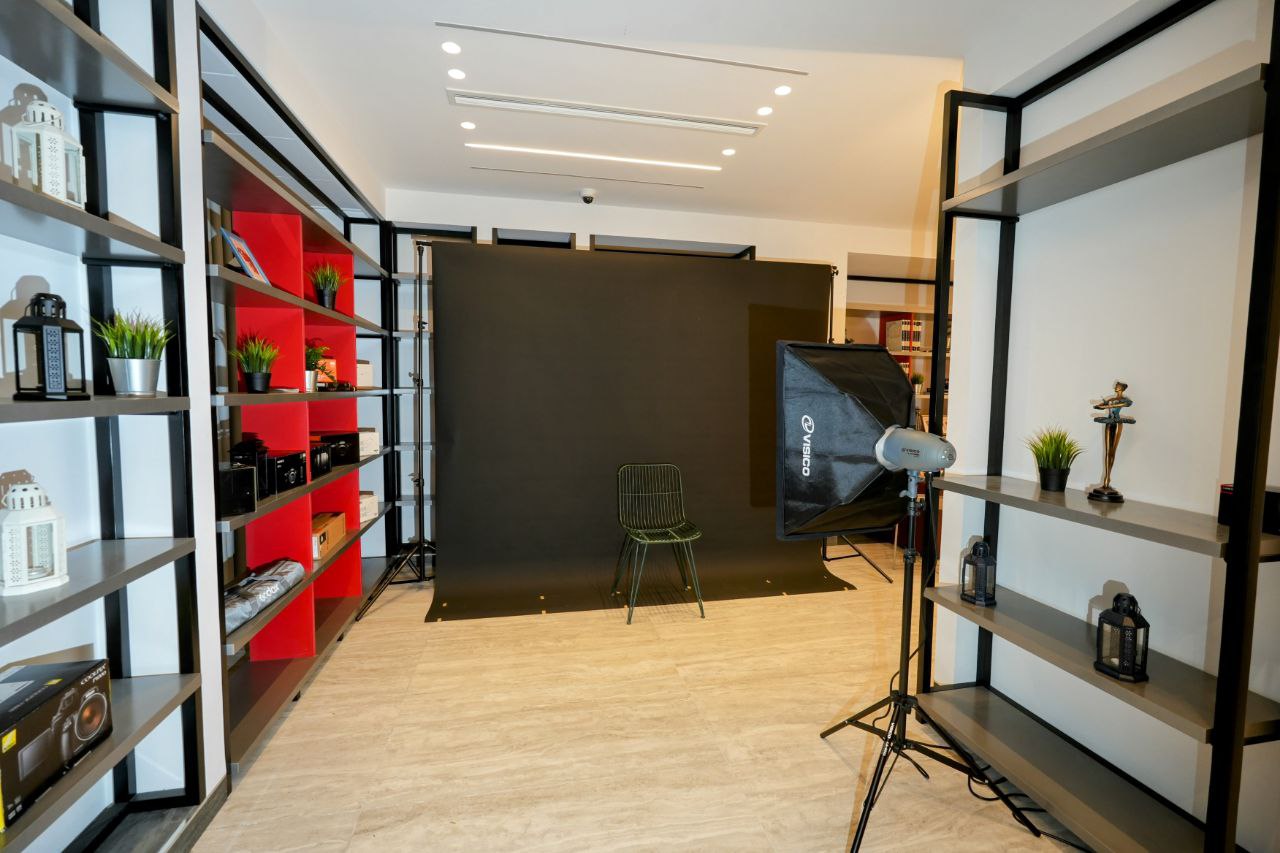
Executive interview and testimonial video production turns a leader’s insight or a client’s satisfaction into a short, polished video — the kind companies use on LinkedIn, sales pages, and investor updates. In Lebanon, StudioLebanon produces both using the same talking-head process out of our Zouk Mosbeh studio: professional camera, lighting, and audio, with a teleprompter for structure. The two formats differ mainly in who’s on camera and how the footage gets used afterward.
If you’ve never commissioned one of these before, it’s easy to assume “interview video” and “testimonial video” need entirely different production setups. They don’t. What actually changes is the speaker, the script, and the distribution plan — and getting those three right matters more than any camera setting.
Finding 1: Executive interviews and testimonials share one production process
Claim: Both formats are built on the same talking-head foundation — camera, studio lighting, professional audio, and teleprompter support.
Data: The difference isn’t in the gear or the studio setup; it’s in who sits in the chair (your own leadership vs. a client) and what the finished video is meant to do (build authority vs. build trust).
Practical translation: You’re not booking two different “kinds” of shoots — you’re booking one production process and adapting the script and speaker to the goal.
Finding 2: Executive videos serve different audiences depending on where they’ll run
Claim: A leadership video written for one audience often falls flat with another.
Our talking-head video production in Lebanon packages are starting from $350, with a teleprompter, multi-camera 4K and editing included.
Data: The same executive on camera might be speaking to investors in one video, prospective hires in another, and industry peers in a third — LinkedIn thought leadership, recruiting/employer branding, and investor updates are three genuinely different scripts.
Practical translation: Decide who’s actually meant to watch the video before you write a word of the script — “convince an investor” and “convince a candidate to apply” are not the same message.
Finding 3: Unscripted testimonials tend to ramble — structured ones don’t
Claim: Asking a client to “just talk about working with us” usually produces a meandering, hard-to-edit answer.
Data: A simple four-part structure — the challenge they had, the solution they chose, a specific result, and whether they’d recommend it — consistently produces tighter, more usable footage than an open-ended conversation.
Practical translation: Send your client 4-6 guiding questions ahead of the shoot instead of hoping they’ll naturally hit the right points on camera.
Finding 4: One shoot should produce more than one video
Claim: Treating the long-form interview as the only deliverable leaves value on the table.
Data: A single 3-5 minute interview typically has 3-4 moments strong enough to stand alone as 60-90 second vertical cutdowns for Instagram, LinkedIn, or TikTok.
Already have the footage? Our professional video editing is starting from $25/video.
Practical translation: Plan for short-form cutdowns before the shoot, not as an afterthought once the master video is already delivered — it changes how you frame questions on camera.
Finding 5: Specific details are what make a testimonial persuasive
Claim: Vague praise like “they were great to work with” does very little for a viewer who’s still deciding whether to hire you.
Data: Testimonials built around one concrete, verifiable detail — a real number, a timeframe, a clear before-and-after — are consistently more persuasive than general compliments, because they give a skeptical viewer something specific to believe.
Practical translation: Before the shoot, ask your client which one concrete result they’re comfortable citing on camera — and build the rest of the questions around drawing that detail out clearly.
What This Looks Like in Practice
For BookingBeirut, a real estate booking platform, the brief started as real estate video production — but the executive video that came out of it ended up doing a different job: showcasing the quality of their portfolio directly to potential property owners, not just renters.
“Working with StudioLebanon has been a game-changer for BookingBeirut. We came to them looking for high-quality real estate video production to help us secure renters, but what we received was so much more. Their hard work and dedication to the craft are evident in every project. The executive video they produced for us was instrumental in showcasing our premium level of work. It allowed us to visually communicate the quality of our portfolio to potential property owners, which directly helped us expand our network and secure new owners. Thanks to their creative vision and professionalism, we have seen a significant increase in high-quality leads. StudioLebanon is more than just a vendor; they are a vital partner in our growth. We highly recommend them to anyone looking to elevate their real estate marketing.”
— Roy Khoury, General Manager, BookingBeirut
Practical translation: The specific results Roy points to — new owner acquisitions and a measurable rise in high-quality leads — are exactly the kind of attributable outcome Finding 5 describes. That specificity is what makes a testimonial persuasive rather than just polite.
Short cut-downs for Instagram and LinkedIn can be filmed in the same visit with our social media video recording.
What Didn’t Actually Matter: The Myth That Longer Interviews Make Better Videos
It’s tempting to assume that giving a speaker more time on camera produces a richer, more usable video. In practice, a tightly scripted 3-5 minute interview that gets edited down to a focused 60-90 second final cut usually beats an unscripted 20-minute conversation — because editing can trim length, but it can’t rescue an answer that never had a clear point.
Practical translation: Prepare your speaker’s key talking points in advance rather than relying on interview length to eventually get there.
What to Do This Week
- Decide which video you actually need — an executive/leadership piece, a customer testimonial, or both — before booking a session.
- Draft 4-6 structured guiding questions for your speaker in advance instead of planning to improvise on the day.
- Identify one specific, concrete result or detail your speaker is comfortable sharing on camera — a number, a timeframe, a clear outcome.
- Decide where the video will actually run — LinkedIn, a sales page, an investor deck — before the shoot, since that shapes both tone and length.
- Plan for short-form cutdowns from the start, not as a separate request after the main video is finished.
- Book your session at StudioLebanon’s Zouk Mosbeh studio with a speaker who’s prepared, not just available.
FAQ
What’s the difference between an executive interview video and a testimonial video? Both use the same talking-head production setup; the difference is who’s speaking and why. An executive interview features your own leadership building authority or communicating internally, while a testimonial features a client or customer building trust with prospective buyers.
Who should be on camera for an executive interview? Whoever the target audience most needs to hear from directly — a founder or CEO for investor and brand-authority content, a department head for recruiting content, or a product lead for more technical audiences.
How should I prepare a client for a testimonial shoot? Send them a short set of structured questions in advance covering the challenge they had, why they chose you, a specific result, and whether they’d recommend you — rather than asking them to speak freely with no structure.
Can one video shoot produce more than one final video? Yes — a single interview session is usually enough to produce one longer-form video plus several shorter vertical cutdowns for social platforms, as long as the questions are framed with those cutdowns in mind.
Where can these videos actually be used? Common placements include LinkedIn and other social feeds, landing or sales pages, investor updates, recruiting pages, and internal town halls — the right placement should be decided before the shoot, since it shapes the script.
Do I need a full script, or can my speaker talk freely? A middle ground works best: structured guiding questions rather than a word-for-word script, giving your speaker room to sound natural while still keeping answers focused enough to edit cleanly.